ESG
An integrated platform for monitoring sustainability indicators, resources, and emissions to support a more efficient and sustainable work environment.
The Environmental and Sustainability System within the Green Codes platform provides a complete digital solution for tracking environmental and sustainability indicators with high efficiency. It starts from recording resource consumption and emissions, followed by analyzing environmental performance indicators, and ends with preparing approved sustainability reports.
The system allows organizations to easily monitor environmental performance, helping improve resource efficiency, reduce environmental impact, and support ESG (Environmental, Social, and Governance) initiatives.
The system also supports instant reporting and interactive dashboards that help analyze sustainability indicators, enabling decision-makers to take proactive steps toward building a more sustainable and environmentally responsible workplace.
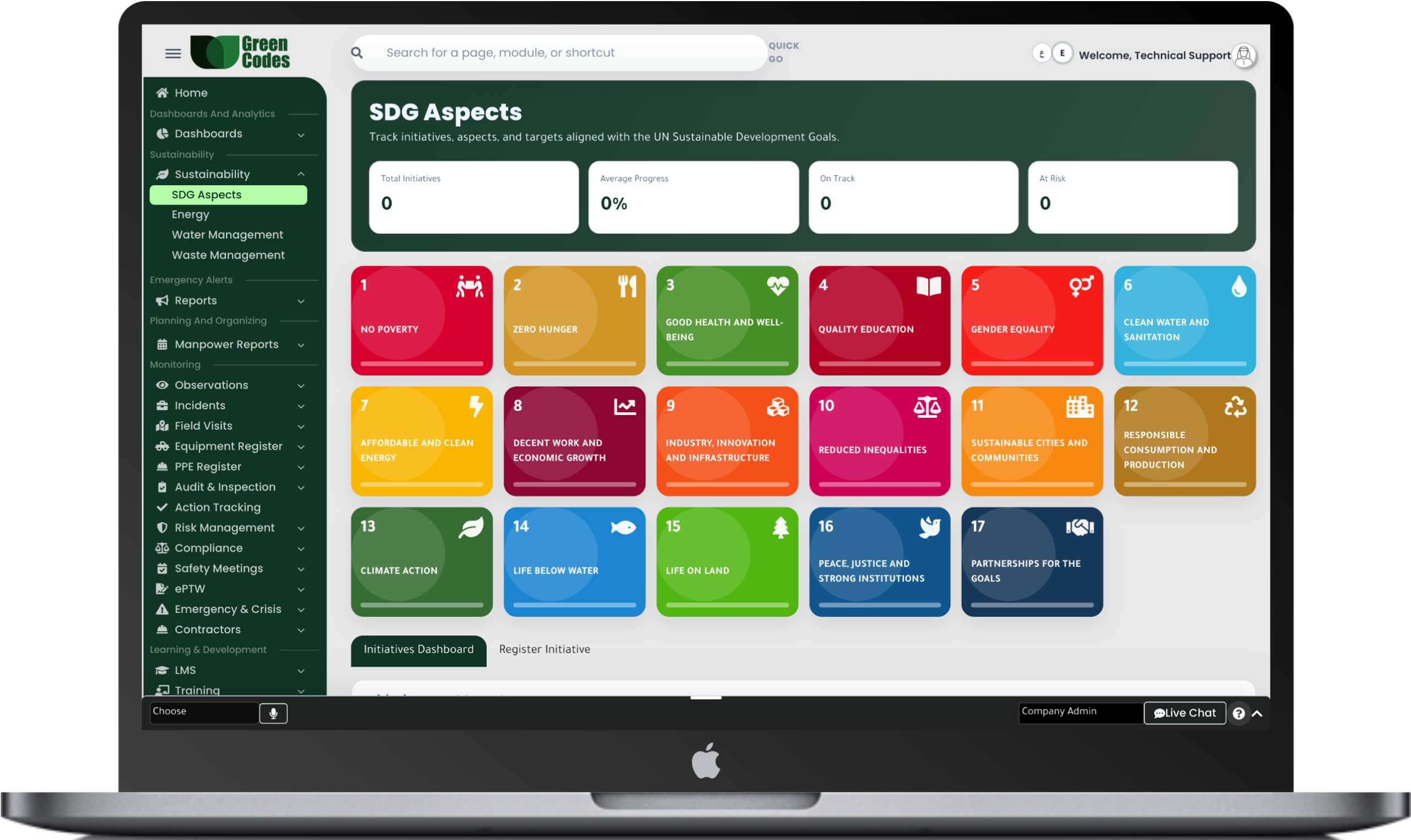
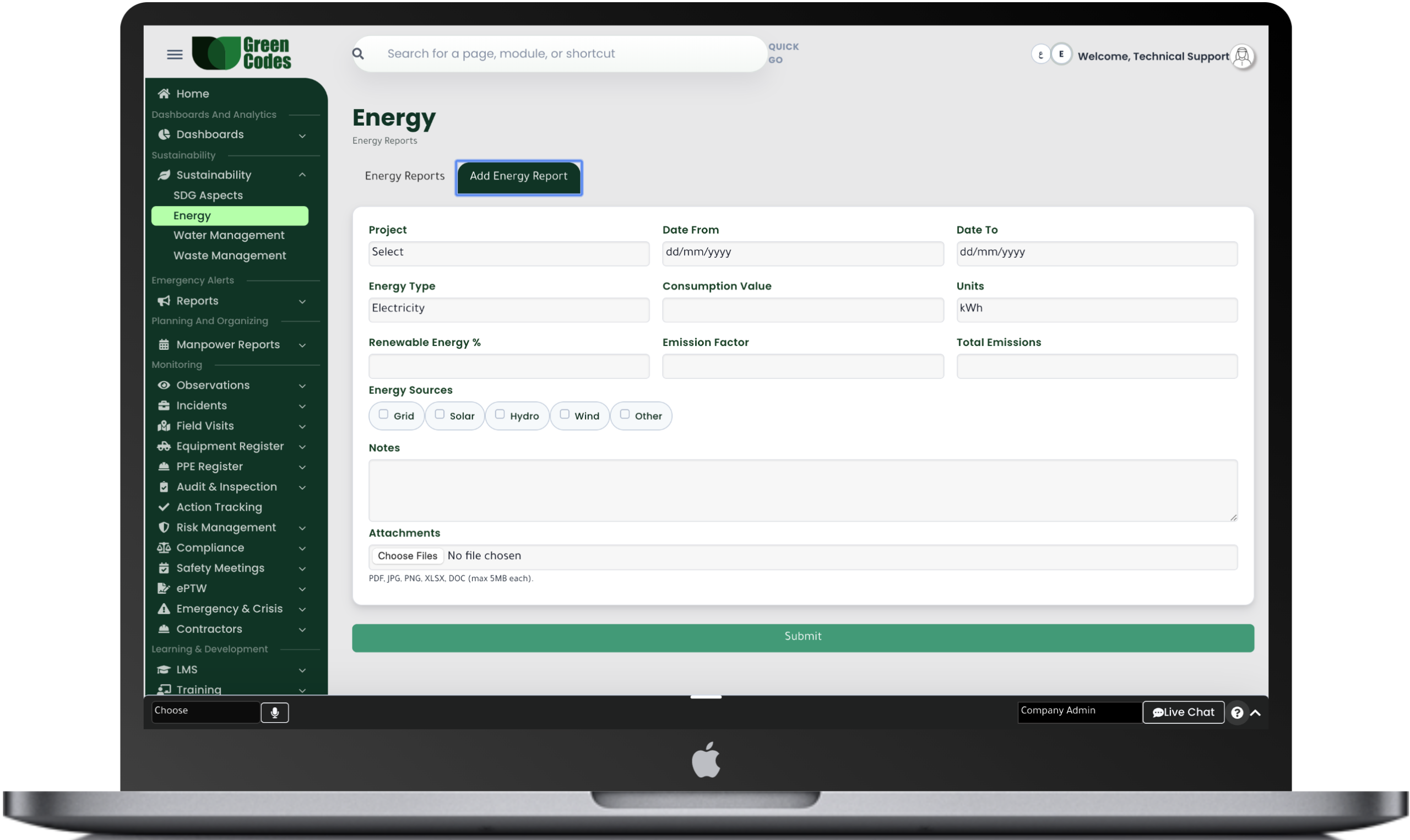
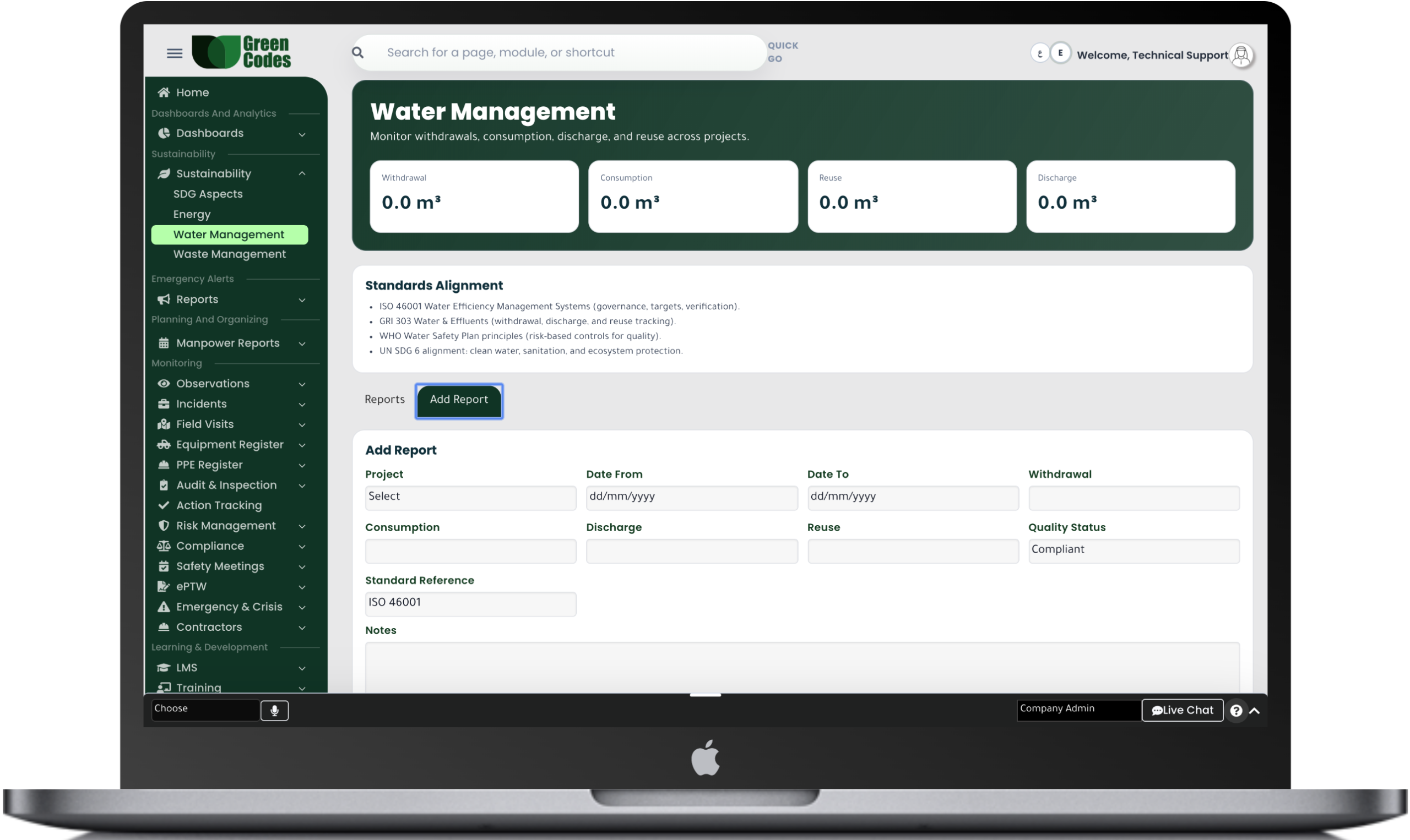
The Environmental and Sustainability System within the Green Codes platform provides a complete digital solution for managing and monitoring all environmental performance and sustainability indicators with high efficiency.
The system allows organizations to easily record environmental data and ESG indicators, including energy consumption, water usage, fuel consumption, waste management, carbon emissions, and sustainability performance metrics through the web platform or mobile application, with the ability to link data to projects and locations. This helps improve data accuracy and supports institutional sustainability plans.
It also supports periodic reports that help organizations measure environmental performance, as well as emissions calculations based on Scope 1, Scope 2, and Scope 3 standards, enabling companies to achieve sustainability goals and comply with local and international environmental standards.
The system provides a comprehensive set of reports and interactive dashboards that help analyze resource consumption and environmental emissions, such as electricity, water, fuel consumption reports, waste management reports, and carbon footprint reports.
It also provides executive sustainability reports that help management monitor environmental performance indicators, compare results across projects or ESG periods, and generate time-based reports, enabling decision-makers to take proactive steps to improve environmental efficiency.
The system follows a clear workflow that starts with entering environmental data from projects or different departments, followed by reviewing and approving the data.
After that, the system automatically analyzes the information and displays it inside dashboards and executive reports.
The system also supports tracking environmental improvement plans and actions related to reducing consumption and emissions, with periodic alerts for reviewing performance.
Data Entry → Review and Approval → Analysis → Reports → Improvement Plans
- Scope 1, 2, and 3 emissions calculations
- ESG sustainability reports
- Energy and water consumption tracking
- Waste management and recycling reports
- Interactive dashboards
- Environmental KPI indicators
- Comparison between projects
- Environmental compliance support
Frequently Asked Questions (FAQ)
What types of environment and sustainability data can be tracked within the system?
The system allows for tracking consumption of electricity, water, and fuel, as well as waste quantities categorized by type (general, hazardous, or recyclable). You can also monitor emissions and environmental incidents such as spills. Data can be linked to specific projects, sites, contractors, and time periods for easy comparison. Furthermore, you can set environmental goals for each project and track progress via Key Performance Indicators (KPIs).
How are emissions calculated according to Scope 1, Scope 2, and Scope 3?
The system follows standard categorization to identify emission sources:
Scope 1: Direct emissions from sources owned or controlled by the organization.
Scope 2: Indirect emissions from the generation of purchased energy.
Scope 3: All other indirect emissions in the value chain. You can input activity data (such as fuel liters or kWh), which the system links to emission factors to calculate your carbon footprint, ensuring transparency and consistency with the GHG Protocol.
Does the system support Saudi environmental compliance requirements, such as waste management?
Yes. You can configure forms and reports to track waste from the source through transport and final treatment, documenting contractors, dates, and quantities. The system generates periodic reports that help meet the requirements of relevant authorities when evidence or data is requested. Maintaining a digital waste log significantly enhances traceability and commitment to local regulations.
How does the system handle environmental incidents and emergencies like spills?
Environmental reports can be logged with location, quantity, type, and immediate actions taken (containment/cleanup), along with photo attachments. The system then facilitates the creation of Corrective Actions—such as improved storage, containment trays, or specialized training—to prevent recurrence. Linking incidents to targeted environmental inspection plans increases prevention effectiveness.
Can the Environment module be linked to ISO 14001 standards or environmental audit programs?
Yes. You can build environmental checklists and document evidence and measurements linked to periodic reviews. The system supports the ISO 14001 framework—including monitoring, measurement, evaluation, and internal auditing—as core elements for continuous compliance and improvement. This transforms environmental compliance into a continuous “process” rather than a seasonal document prepared only before an audit.
How does the system support ESG reporting for senior management or investors?
Sustainability and environmental indicators are aggregated into an Executive Dashboard that displays performance against goals and historical periods. Data can be exported and linked to evidence (such as recycling certificates or measurement reports), reducing manual effort and increasing the reliability of information provided to stakeholders.
How does the system ensure environmental data quality and minimize errors?
The system applies validation rules, such as preventing the entry of illogical values and requiring the upload of invoices or meter readings as proof. Data can go through an approval workflow by an environmental officer before being included in official reports. Additionally, an audit trail records every modification, identifying who made the change and why, which increases trust in the figures.
Can consumption and emission reduction targets be set and monitored?
Yes. You can establish a Baseline and then set monthly or annual targets, such as reducing water consumption or increasing recycling rates. Results are displayed in trend charts with alerts for deviations from the goal. These deviations can be linked to an action plan, allowing you to measure the plan’s subsequent impact on the indicators.